


You must be logged in to post a review.
CYLINDER BRUSH FOR WOOL CARDING
Description
The aim of the carding is to realize the fibres separation, by releasing them from the impurities still present and by completing the opening and the cleaning started in the previous passages. The cylinder has to keep clean the carding rolls during the working process
Manufacturing Features
- Internal part in tube in steel
- Heads and pivots in steel shrinking on
- The pivots are rectified
- Covered with staves in wood
- Covered with jacket in aluminium
- Normally trimmed with bristles in tampico or in a special mixing, in order to eliminate the electrostatic electricity accumulation
- Turned and levelled external surface for a perfect circularity and concentricity respect to the axe of rotation
- Manufactured by respecting the dimensions and the features chosen by the Customer
- The materials and the working processes used, grant the respect of the functional features and of the safety regulations
Functional Features
- Dynamic balacing with certification, related to the speed required by the Costumer
Related products


RAISING MACHINE DOUBLE DRUM [2G24 ]
RAISING MACHINE DOUBLE DRUM [2G24 ]
Description:
RAISING MACHINES FOR WOVEN AND KNITTING FABRICS WITH DOUBLE DRUMS
DOUBLE DRUMS WITH 24 ROLLERS . The raising machine 2G24 is controlled by PLC, with operator interface by Color Touch Screen and inverters controlled.Machine can process any kind of fabrics from natural or synthetic fibres and is available with 24 + 24 raising rollers,widths from mm.1800 to mm.3600; The machine has metallic cleaning brushes in synchronization with the drum; The metallic brushes are use for cleaning and sharpening of the raising fillet and allow raising fillets last longer.
Characteristics:
The 2G24 raising machine has been recently renewed and equipped with the latest components and knowledges.
In the 2G24 machine, the main objective was to create a versatile and complete machine,
capable of facing and therefore facilitating all the problems related to the raising process of all types of fabrics.
The design of the new range of our raising machines, was carried out according to the most modern design methods,
thus allowing the creation of a product that, on the market, is placed in the range of high performance machines.
Innovative, high-performance, sturdy and very reliable raising machines made in the name of technological innovation at the service of an increasingly demanding clientele but always in accordance with our sixty-year construction experience.
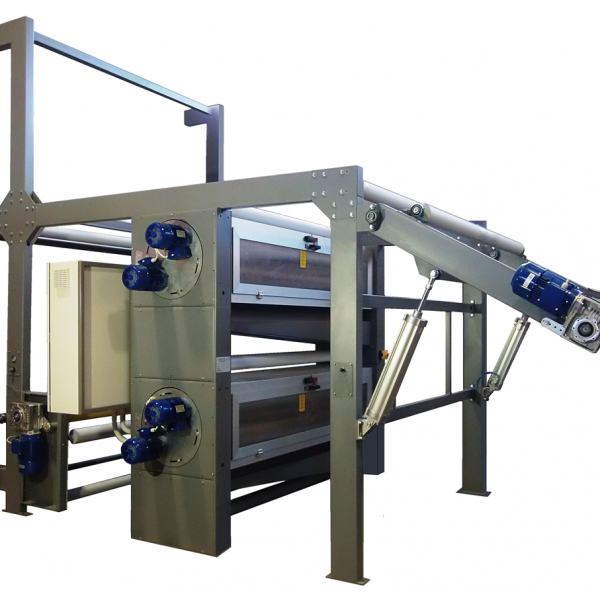
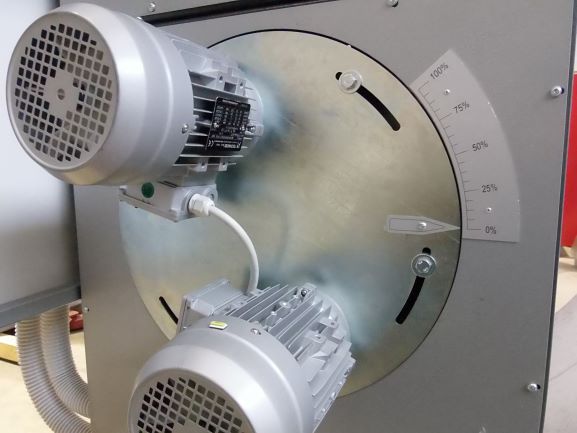
DUST CLEANING BRUSHING MACHINE SP200 x2 for woven fabrics
DUST CLEANING BRUSHING MACHINE SP200 x2 for woven fabrics
Description:
LINT/ DUST REMOVAL MACHINE
SP200 x 2 for woven fabrics
This brushing/cleaning machines is a COMBINATION of three actions:
beating / brushing / sucking.
Beating is made by beaters rollers and brush by the means of brush rollers,
sucking is made from an efficient air sucking system that catch the removed dust / lint and collect them to an external filter unit.
Brushes and beaters rollers are working at the same time on front and on back sideof the fabric to assure the maximum cleaning efficiency.
The entire units is made of mild-steel.
Some parts for their particular constitution and function, are galvanized coating and the frames are treated with epoxy paints.
This brushing/cleaning machines is an efficient group easily applicable
to any other machine or in a line of processing machines.
Its dimension let it to be suitable for different applications.
Additional air blades can be installed in the machine; The air blades are blowing ionised high air pressure that let's the stubborn static dust to be roved easily from fabric surface.
Characteristics:
Machine suitable for heavy woven fabrics as denim, home textile fabrics.
Individual motor for each brush;
4 sets of nylon hair brushes made of helical bristles shape;
High pressure motor fan for air-blades;
2 set of high pressure air-blades;
4 ionized bars positioned inside the air-blades;
Windows for easy access inside the machine;
Load cell or dancing roller for tension control of fabrics;
Electric panel with inverters control for fabric pulling and speed of brushes;
Batching roller at outlet;
Complete suction unit, with motor-fan and filter bags ;

Washing Range after printing/Dyeing
Washing Range


DUST CLEANING BRUSHING MACHINE SP200X2 for knits fabrics
DUST CLEANING BRUSHING MACHINE SP200X2 for knits fabrics
Description:
DUST CLEANING MACHINE
BRUSHING MACHINE TYPE SP200X2 FOR KNITS FABRICS
This brushing/cleaning machines is a COMBINATION of three actions:
beating / brushing / sucking.
Beating is made by beaters rollers and brush by the means of brush rollers,
sucking is made from an efficient air sucking system that catch the removed dust / lint and collect them to an external filter unit.
Brushes and beaters rollers are working at the same time on front and on back sideof the fabric to assure the maximum cleaning efficiency.
The entire units is made of mild-steel.
Some parts for their particular constitution and function, are galvanized coating and the frames are treated with epoxy paints.
Additional air blades can be installed in the machine; The air blades are blowing ionised high air pressure that let's the stubborn static dust to be roved easily from fabric surface.
Characteristics:
Dust Cleaning Brushing machines, Type SP200X2 with;
Inlet with adjustable tensioning bar;
Double adjustable expander unit with Two motorized scroll rollers adjustable at 360°;
Centering device type “Slatted drum” with feeding motor and photocells for centering;
Individual motor for each brush;
2 sets of beaters rollers made by stainless steel star-shape;
2 sets of Horse hair brushes made by straight bars bristles shape;
Electric actuators for brush distance position. ( EXCLUSIVE FROM CARU’)
Transparent windows for easy access in to the machine;
Electric panel with inverter for fabrics drive;
Distance sensor for no-tension control of the running fabrics with accumulation cradle ( EXCLUSIVE INNOVATION FROM CARU’);
Outlet motor roller with plaiter unit at outlet ;
Complete suction, with motor-fan and filter bags unit;
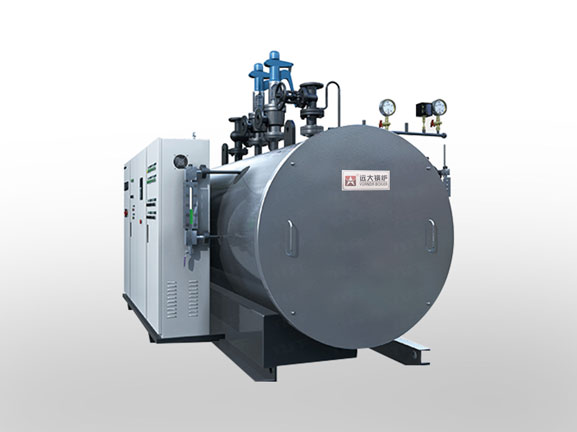
Electric Steam Boiler
Electric Steam Boiler
Electric steam generator boiler | Horizontal electric boiler | Eco-friendly boiler
Horizontal electric automatic boiler is a kind of 99.8% efficiency which takes electricity as energy. It has the advantages of environmental protection, no pollution, no noise, convenient installation, small occupation
Output: steam
Thermal Capacity: 0.2ton/h-4ton/h 100kg/h-4000kg/h
Styles: horizontal or vertical
Powered by: electricity
Applied Industries: food, beverage, diaries, feed mill, garment, textile mill, paper mill, packaged, refinery, chemical, laundry, hotel, greenhouse etc
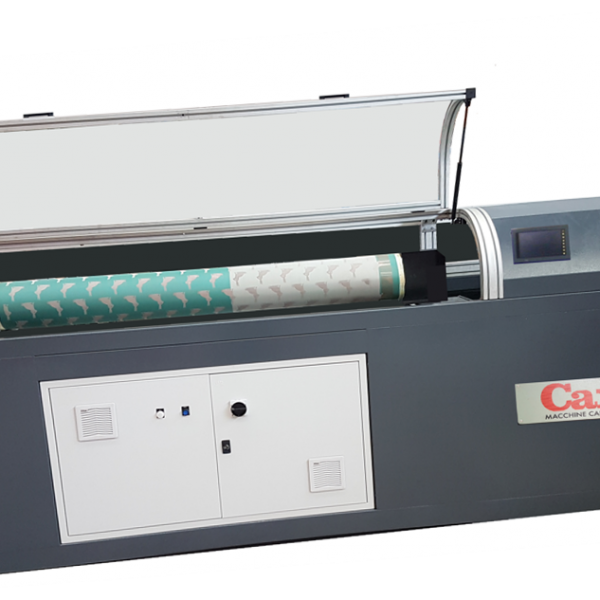

STRIPPING MACHINE FOR ROTARY SCREENS
STRIPPING MACHINE FOR ROTARY SCREENS [ERALASER]
Description:
This machine has been designed to strip printing rotary screens;
Direct laser beam is used to strip (to remove) the coated resin from the nickel screen surface.
LASER STRIPPING MACHINE , the machine is generally equipped for taking up screens of standard repeats of 640mm, 820mm, 914mm, 1018mm. Screen lenght upto 3700mm.
Characteristics:
PLC Control ; Touch-Screen; Single Beam Laser; Long Life Laser Source.
The word Laser is actually an acronym
LASER
L is for Light
A is for Amplification
S is for Stimulated
E is for Emission
R is for Radiation


S330 Pattern sueding
S330 Pattern sueding
Description:
The new Caru’ Pattern sueding technology, with the very latest technical features combined with modern control equipment and electronics, provides the technical process conditions that are expected of such a process today. The new model S330 Pattern Sueding machine to be shown at last ITMA 2015 in Milan, will incorporate new features achieving the above targets. Already many S330 machines are running in large factories worldwide. Perfect the art of fabric patterning with Caru’ solutions for any kind of, which feature are the most advanced technology in the field. Whether richly patterned dress or tie fabrics, upholstery fabrics, damask fabrics, sportswear, labelling or sophisticated technical textile, with Caru’ machines you can produce a creative and profusely diverse assortment of high quality woven and knits of both and synthetic fibers. The sueding machine S330 is made up of one sueding roller which is contrasted to a roller covered with rubber, let's to suede all kind of fabrics. This machine can suede woven, knit fabric and other materials as non wovens, denim, outwear, swimwear, sportwear, lingerie,used also in home textile and automotive fields, as imitation leather and nonwoven fabric so as to obtain finished products of excellent quality. Particular is the possibility to make sueded drawings on fabric, this technology is called PATTERN SUEDING, that is by means of a rubber roller that has been engraved with drawings which has to be reproduced on the surface.
THEATER UPHOLSTERY
IN MILAN
The Pattern Sueding can be utilized for handling a wide range of product and also incorporates many design features, how will use it up to your need of creativity in sueding.
Unleash your passion to create imaginative fabric designs.
Characteristics:
COTTON, VELVET, POLYESTER KNITS, DENIM, SATIN AND ALL NATURAL AND SYNTETIC FABRICS
Options:
Reviews
There are no reviews yet.