

SHOP
- All products
- Uncategorized0 products
- AUTOMATION12 products
- Machinaries5 products
- Mazza Gianni9 products
- PACKAGING MACHINERY0 products
 REPAIRING0 products
- Slitting Machine0 products
 SPARE PARTS32 products
- Stenter Machine1 product
- TEXTILE MACHINERY58 products

Infrared edge sensor FR 5503
Product description
- Used for optical and mechanical scanning of web edges in tenters
- Infrared edge sensor based on the reflection principle
- Reliable scanning of the web edge even on contrast-rich printed materials and low-reflective colors
- In case of uneven web edges, mechanical scanning by pivoting in the scanning lever will dampen the control
- Measuring range: ±10 mm
Technical Specifications
| Nominal supply voltage | 24 V DC |
| Permitted supply voltage range | 20 to 30 V DC (ripple included) |
| Current consumption | 100 mA |
| Power consumption | 2.4 W |
| Scanning frequency | 100 Hz |
| Measuring range | +/- 10 mm |
| Distance edge sensor - web | 36 mm |
| Protection class | Max. IP 65 with suitable connector inserted |
| Ambient temperature | +10 °C to +60 °C |
| Storage temperature | -10 °C to +80 °C |
| Weight without scanning lever | 0.37 kg |
| Weight with scanning lever | 0.46 kg |


LAPPING BRUSHES
Description
The aim of these bushes is to have a homogeneous lapping effect, avoiding any problems of rows and folds over the entire surface of the fabric.Manufacturing Features
- Manufactured with a tube of special steel
- The pins are ground and hot introduced
- A wide choice of grain and abrasive section
- The hole is specially arranged so to allow the tissue to remain stretched all the time
- Manufactured in accordance with the Costumer’s dimensions and features
- The materials and the machining processes we use are a guarantee for complying with the functional features and the safety standards
Functional Features
- Dynamic balance with certification, based on the speed requested by the Customer
- Longitudinal and torsion stiffness suitable for avoiding unwanted deformation and vibrations
- A high resistance of the abrasive bristles, even under hard working conditions and on several kinds of tissues


LAPPING BRUSHES EQUIPPED WITH CERAMIC COATED BRISTLES
Description
The iam of these brushes is to have a homogenous effect of grinding, avoiding problems of rows and folds over the entire surface, producing new effects on the fabricManufacturing Features
- Manufactured in a special aluminium
- Bristles in rilsan resistant at high temperatures
- The bristles are placed on a tile in aluminium with hand-made sewings, in order to grant a higher bristle tightness, for the great effort to which it is subjected
- Turned and levelled external surface for a perfect circillarity and concentricity respect to the axe of rotation
- Manufactured by respecting the dimensions and the features chosen by the Customer
- The materials and the working processes used, grant the respect of the function al features and of the safety regulations
Functional Features
- Possibility to assemble the tiles on the surface of any other cylinder
- Maximum easyness in the substitution of the damaged tiles
- Long working life even in hard exercise conditions

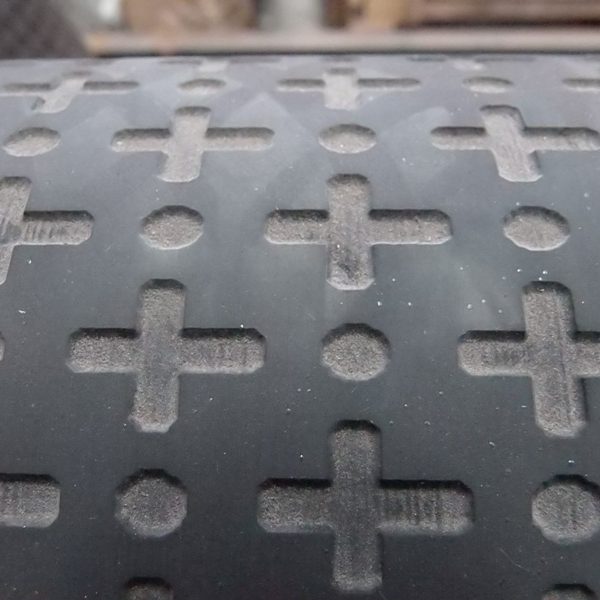
LASER ENGRAVING [LS100]
LASER ENGRAVING [LS100]
Description:
LASER ENGRAVING MACHINE LSC100 激光雕刻机
ENGRAVING MACHINE SUITABLE FOR RUBBER ROLLER AND RUBBER SLEEVES.
Laser engraving machine type LSC120
The laser engraving machine has two main parts: a laser source and a controller system. The beam emitted from the laser allows the controller to trace patterns onto the surface of the roller. The controller (computer) controls the direction, intensity, speed of movement, and spread of the laser beam aimed at the surface. The point where the laser beam touches the surface of the roller should be on the focal plane of the laser’s optical system, and is usually synonymous with its focal point. This point is typically small, less than a fraction of a millimeter (depending on the optical wavelength). Only the area inside this focal point is significantly affected when the laser beam passes over the surface. The energy delivered by the laser changes the surface of the material under the focal point. This is how material is removed from the surface to create an engraving. The surface material is vaporized during laser engraving, ventilation through the use of blowers and a vacuum pump that are required to remove the fumes arising from this process, and for removal of debris on the surface to allow the laser to continue engraving. The speed at which the beam moves across the material is also considered in creating engraving patterns. Changing the intensity and spread of the beam allows more flexibility in the design. For example, by changing the proportion of time (known as “duty-cycle”) the laser is turned on during each pulse, the power delivered to the engraving surface can be controlled appropriately for the material.
Characteristics:
PLC Control, Touch-Screen;
The word Laser is actually an acronym
LASER
L is for Light
A is for Amplification
S is for Stimulated
E is for Emission
R is for Radiation


LASER ENGRAVING MACHINE [ZEUS]
LASER ENGRAVING MACHINE [ZEUS]
Description:
LASER ENGRAVING MACHINE FOR PRINTING ROTARY SCREENS
& FLEXOGRAPHIC ROLLERS AND SLEEVES
DIRECT LASER ENGRAVING SYSTEM
Laser engraving machine
The laser engraving machine has two main parts: a laser source and a controller system. The beam emitted from the laser allows the controller to trace patterns onto the surface of the roller. The controller (computer) controls the direction, intensity, speed of movement, and spread of the laser beam aimed at the surface. The point where the laser beam touches the surface of the roller should be on the focal plane of the laser’s optical system, and is usually synonymous with its focal point. This point is typically small, less than a fraction of a millimeter (depending on the optical wavelength). Only the area inside this focal point is significantly affected when the laser beam passes over the surface. The energy delivered by the laser changes the surface of the material under the focal point. This is how material is removed from the surface to create an engraving. The surface material is vaporized during laser engraving, ventilation through the use of blowers and a vacuum pump that are required to remove the fumes arising from this process, and for removal of debris on the surface to allow the laser to continue engraving. The speed at which the beam moves across the material is also considered in creating engraving patterns. Changing the intensity and spread of the beam allows more flexibility in the design. For example, by changing the proportion of time (known as “duty-cycle”) the laser is turned on during each pulse, the power delivered to the engraving surface can be controlled appropriately for the material.
Characteristics:
The word Laser is actually an acronym
LASER
L is for Light
A is for Amplification
S is for Stimulated
E is for Emission
R is for Radiation
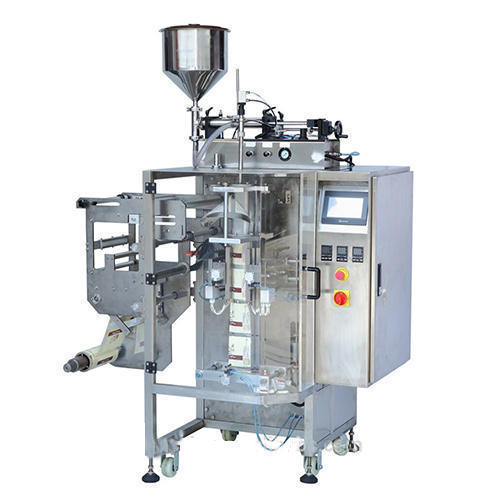

LME 21.130 C2
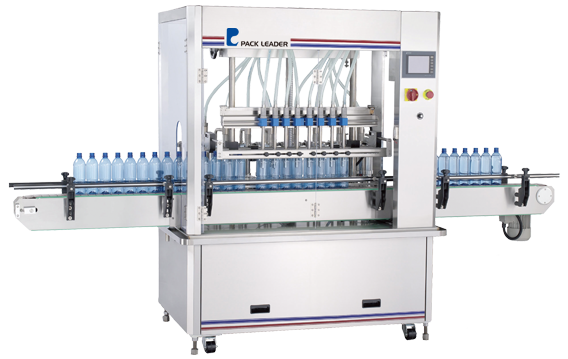
LME... replace the LMG automatic firing devices in the same housing... see table. With fault diagnostics.
| Manufacturer item no.: | LME 21.130 C2 |
| Type: | LME 21.130 C2 |
| Brand: | Siemens |


LSS Once Through Steam Boiler
LSS Once Through Steam Boiler
Vertical water tube steam boiler | Quick steam generator | Small steam boiler
LSS Once through steam boiler is vertical type boiler with small steam capacity, also named quick steam boiler/generator, two stage flame, it could generate steam within 3~5 minutes, is the embodiment of high technology
Output: saturated steam
Thermal Capacity: 200-2,000kg/hr 120-1,400kw/h
Styles: horizontal/vertical, fire tube/water tube
Available Fuel: heavy oil, diesel, furnace oil, biogas, NG, CNG, LNG, LPG, dual fuel
Applied Industries: food, beverage, feed mill, textile mill, paper mill, packaged, refinery, chemical, laundry, hotel, greenhouse etc

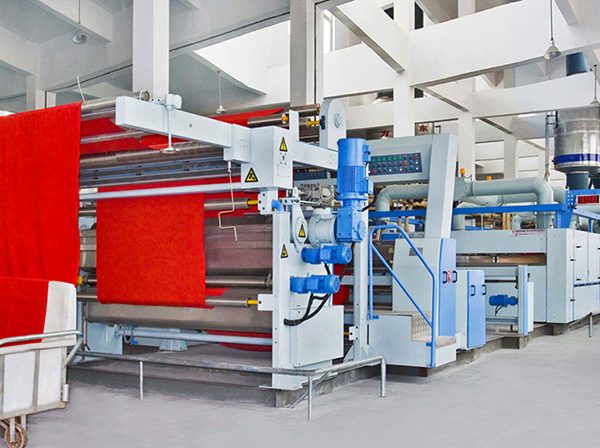
M5469 stentering boarding machine
Product uses
This product is appropriate for polyester filament yarn, polyester low elasticity silk fabric, pure cotton or other knitting fabric with weight of 70-400g/m2.
Main technical index
Form: heated air circulation, single layer horizontal type
Vehicle category: left hand or right hand
Nominal width(mm): 1800-3600
Amplitude modulation range(mm): 700-(Nominal width-200 mm)
Speed range: 5-100m/min
Over-feed ratio: -10% - +30
Heat source: heat-carrying oil, fuel gas(city gas, natural gas, water gas, liquefied petroleum gas), electricity, saturated vapor
Cloth holding method: needle clamp, cloth clamp, double use clamp
Cropping form: simple pendulum type; or double use
Edge detecting form: high precision infrared
Guide rail form: no lubricating oil lubricating oil guide rail
Installed capacity: (55+n×15)kW
Features
1. High precision infrared edge detecting instrument, powerful antijamming capability;
2. 6mm thick steel plate graphite guide rail, no need of refueling, long serve life;
3. Multistage fabric width adjustment;
4. Front and back double multistage operation system, PLC control system, convenient for operation;
5. Landing minor-cycle building block system oasthouse, small volume, large blast capacity;
6. Frequency converting control, high efficient heated air circulation system;
7. Special nozzle displacement;
M5471 knitting stentering boarding machine
Product uses
This product is appropriate for polyester filament yarn, polyester low elasticity silk fabric, pure cotton or other knitting fabric with weight of 60-700g/m2.
Main technical index
Form: heated air circulation, single layer horizontal type
Vehicle category: left hand or right hand
Nominal width(mm): 1800-3600
Amplitude modulation range(mm): 700-(Nominal width-200 mm)
Speed range: 5-100m/min
Over-feed ratio: -10% - +30
Oasthouse temperautre: 100-230ºC
Heat source: heat-carrying oil, fuel gas(city gas, natural gas, water gas, liquefied petroleum gas), electricity
Cloth holding method: needle clamp
Cropping form: simple pendulum type; or double use
Edge detecting form: High precision infrared edge detecting
Guide rail form: no lubricating oil steel plate guide rail
Size: (16115+n×3000)×(W+2500)mm×2300mm
Installed capacity: (55+n×15)kW
Features
1. Active infrared, synchronous with main engine;
2. E+L tension sensor controlled padder, realizing low tension and constant tension running;
3. E+L infrared edge detecting indstrument, excellent antijamming capability;
4. 6mm thick steel plate graphite guide rail, no need of refueling, long serve life;
5. 9 section width adjustment;
6. Heat-carrying oil heating method, high accuracy;
7. Front and back double multistage operation system, PLC control system, convenient for operation;
8. Landing minor-cycle building block system oasthouse, small volume, large blast capacity;
9. Frequency converting control, high efficient heated air circulation system;
10. Special nozzle displacement;